Sports Massage vs Remedial Massage: What’s the Difference?
TL;DR
- The core difference between the two is in purpose, and not technique. Remedial massage treats pain, restriction and soft tissue dysfunction. Sports massage supports training recovery, performance and activity-related muscle load.
- Both use similar methods. Deep tissue work, trigger point therapy and stretching feature in both approaches; but the goal of the session and desired capacity of the body from the patient is fundamentally different.
- Remedial massage suits persistent, everyday issues. Recurring neck, back or shoulder tightness, posture-related strain, tension headaches and reduced range of motion are its core territory.
- Sports massage suits physically active people. Runners, gym-goers, tradies, dancers and anyone whose body handles regular physical demand. It’s not reserved for elite athletes.
- Timing matters for sports massage. It can be used before training, after activity, during event preparation or between sessions to manage soreness and muscle load.
- The two aren’t mutually exclusive. If your needs span both pain relief and activity support, elements of both approaches can be combined depending on the issue, your body and your treatment goals.
Comparison and Integration
The most useful comparison between these two approaches is purpose-led. While remedial and sports massage can look similar on the surface, they’re chosen based on why someone is seeking treatment.
| Remedial Massage | Sports Massage | |
| Primary goal | Pain relief, correction and restoring function | Recovery, performance and activity support |
| Typical client | People with ongoing tightness, dysfunction or postural strain | Athletes and active individuals |
| Common timing | When symptoms persist or movement is limited | Before training, after activity, or during heavy training periods |
| Treatment focus | Underlying soft tissue dysfunction and restricted movement | Sport-specific muscle load and recovery needs |
| Typical techniques | Trigger point therapy, myofascial release, deep tissue and corrective work | Compression, stretching, activation-focused and recovery-oriented techniques |
| Best suited to | Recurring muscular issues affecting daily life | Maintaining performance and managing physical demand |
What Is Remedial Massage?

Remedial massage is a targeted therapy approach used to assess and address muscle tension, soft tissue dysfunction, pain and movement restriction. It’s commonly applied where symptoms are linked to posture, repetitive strain, long hours at a desk, previous minor injuries, chronic tightness or everyday physical stress.
The therapist works with a specific treatment aim: easing tension, improving mobility, reducing discomfort or supporting recovery in an affected area. Common techniques include deep tissue work, trigger point therapy, myofascial release, stretching and focused soft tissue treatment. Delivering this kind of work well requires solid anatomical knowledge, hands-on skill and a clear understanding of what the client needs. That’s why a formal qualification such as a Diploma of Remedial Massage is the standard pathway into practice.
Benefits of Remedial Massage
- Targeted pain relief – Focuses on the tissues contributing to tension, soreness or restricted movement rather than applying a general approach.
- Improved mobility – Supports better range of motion where muscles feel tight, shortened or overloaded.
- Support for posture-related strain – Useful for people dealing with desk work, repetitive tasks or muscular imbalances from daily habits.
- Recovery from ongoing tightness – Assists when the same areas repeatedly flare up, such as the neck, shoulders, lower back or hips.
- Greater body awareness – A good session helps clients understand which movement patterns or stressors feed into the issue.
Remedial Massage Techniques and Practices
For neck and shoulder tension from desk work, a therapist might apply trigger point therapy and deep tissue work through the upper traps, levator scapulae and surrounding tissues.
The lower back and issues with hip restriction, by contrast, respond well to myofascial release paired with gentle mobility techniques.
Tension headaches linked to muscular strain are addressed through careful work into the upper back, neck and jaw-related tension patterns, focusing on easing muscular overload and treating its varying points of strain as collective contributors to the ache that you feel in your head.
Repetitive strain or overuse discomfort calls for specific treatment to forearms, shoulders, glutes or calves depending on the source, using sustained pressure and tissue release. When it comes to issues like postural imbalance driving recurring tightness, assessment-led treatment looks at patterns of compensation rather than just the sore spot, providing a more holistic application with longevity in mind, in the interest of keeping you healthier for longer. You can read more about how remedial massage supports long-term wellbeing.
What Is Sports Massage?
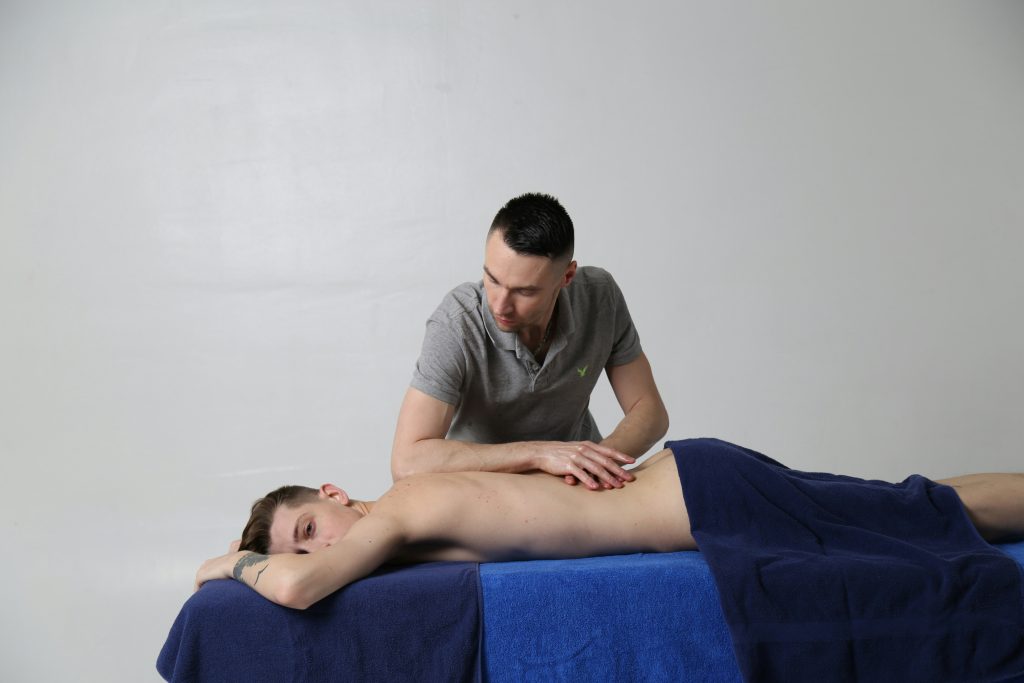
Sports massage is specifically designed to support people who are physically active, particularly around training, competition and recovery. Functionally, its practices can be used before activity, after activity, or during regular training blocks depending on your goals and physical demands.
Treatment is often tailored to specific muscle groups heavily loaded in a chosen sport or activity: calves for runners, shoulders for swimmers, quads and glutes for gym-based training, etc.
Techniques vary too, depending on the physical feats that you’re demanding out of your body. Faster, more stimulating work suits pre-activity sessions to load neural pathways with expected intensity (and the body with similar levels of movement), while slower, recovery-focused methods work better after exercise as a way of signalling the body into parasympathetic processes of rest. These differences in application make it possible to tailor treatment as best as possible to suit performance, reduce muscle tension, assist recovery and help manage training load.
Benefits of Sports Massage
- Supports recovery after exercise – Helps manage post-training soreness so you feel more ready for the next session.
- Helps maintain mobility for sport – Assists with flexibility and movement quality in muscle groups under regular load.
- Useful around training and events – Can be adapted for pre-event preparation or post-event recovery.
- May reduce the impact of muscle tightness – Identifies and addresses overloaded areas before they become more limiting.
- Performance-focused support – For some people, it becomes part of a broader recovery routine alongside strength work, rest and mobility training.
Sports Massage Techniques and Practices
Pre-event preparation involves brisk, purposeful techniques with lighter to moderate pressure, warming tissues and preparing key muscle groups without fatiguing them. Post-event recovery flips this: slower, down-regulating treatment that eases muscle tension and helps the body settle after exertion.
During heavy training blocks, targeted work like muscle stripping on high-load areas like hamstrings, calves, hip flexors or shoulders helps to keep force production throughout your range of motion healthy. For delayed onset muscle soreness and general fatigue, broad flushing strokes, compression and gentle mobilisation techniques support comfort and movement. Return-to-training sessions, for those who might be coming back to their sport following a period of rehabilitation or rest, consider current workload, recent niggles and the demands of the sport itself.
As a key caveat, the line between the two modalities in massage isn’t always rigid. Plenty of clients benefit from an approach that draws on both, especially if they’re active but also dealing with partnered byproducts like recurring pain or restriction in range of motion. The best-fit option depends on symptoms, lifestyle, training load and treatment goals, rather than pigeonholing approaches based on labels alone.
The comparison is really about different treatment focuses. Practitioner training and scope can vary, so choosing a therapist with recognised qualifications in massage therapy matters regardless of which approach you’re after.
FAQ’s
Does remedial massage get rid of knots?
It can help reduce muscular tightness and trigger points often described as knots, but results depend on what's causing the tension and how long it's been present. Some knots are linked to posture, stress or overuse, so relief tends to be strongest when treatment is paired with movement or habit changes. Is sports massage the same as remedial massage?
Not exactly. They overlap in techniques, but sports massage focuses more on activity, recovery and performance while remedial massage centres on pain, dysfunction and restricted movement. Some sessions include elements of both depending on the client's needs. Is a sports massage better than a regular massage?
That depends on your goal. Sports massage suits people who are active and want support with recovery or muscle load. A regular relaxation massage is better if your main aim is stress relief and unwinding. Is there such a thing as a sports massage?
Yes. Sports massage is a recognised approach used to support physically active people before, during and after training or competition. It's not reserved for professional athletes. Does sports massage actually work?
For many people, sports massage helps with short-term relief of muscle tightness, recovery support and maintaining movement quality around training. Outcomes vary from person to person, and it tends to work best as part of a broader recovery approach that includes rest, mobility work and appropriate programming. How do I know if I need a sports massage?
Consider sports massage if you train regularly, feel consistently tight or sore after exercise, are preparing for an event, or want support managing recovery between sessions. If your symptoms are more persistent and not clearly tied to training, remedial or deep tissue massage could be a better starting point. How often should you get a sports massage done?
There's no universal schedule. Frequency depends on your training load, recovery needs, event calendar and how your body responds. Some people book sessions around major events, others go more regularly during intense training blocks, and some stick to less frequent maintenance when activity is stable. The best timing is based on individual goals rather than a fixed rule.
Posted On 27/07/26