Around the world in 5 massages: Iconic massages from different countries
TL;DR
Famous massage techniques from across the globe reflect the health philosophies, movement traditions, and wellness rituals of the cultures that created them.
- Shiatsu (Japan) — Sustained finger, thumb, and palm pressure along meridian lines. No oil, client fully clothed, performed on a floor-level futon. Formally recognised by Japan’s Ministry of Health in 1964.
- Thai Massage (Thailand) — Assisted stretching and compressions on a floor mat, working along ten “sen” energy lines. No oils. Therapist uses hands, elbows, knees, and feet. Sessions typically run 60 to 120 minutes.
- Ayurveda / Abhyanga (India) — Warm herbal oil applied in long, rhythmic strokes that follow the direction of arterial blood flow. Rooted in the Ayurvedic tradition and tailored to an individual’s dosha (body constitution). Oil selection, pressure, and stroke pattern all shift based on the person being treated.
- Lomi Lomi (Hawaii) — Long, continuous forearm and hand strokes with a wave-like rhythm. Both forearms move simultaneously in opposite directions. Rooted in the Hawaiian “aloha spirit,” traditionally incorporating prayer and breathwork.
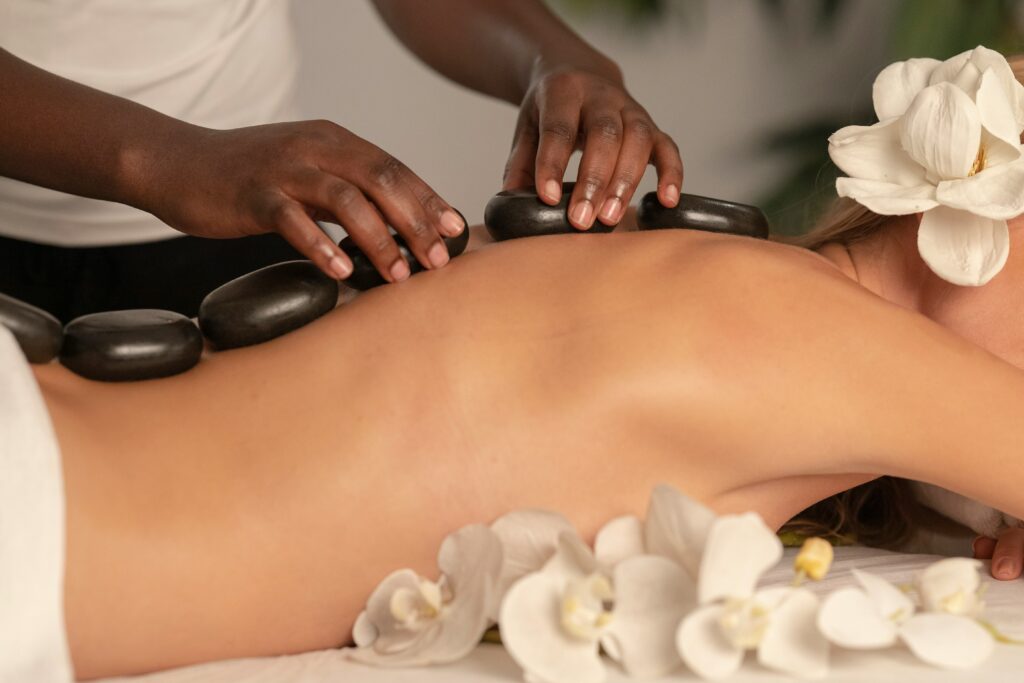
- Hot Stone Massage (Bali) — Heated basalt stones (50–55°C) combined with aromatic oils such as frangipani, sandalwood, or coconut blends. Draws on Ayurvedic, Chinese acupressure, and local herbal traditions. Stones placed along the spine, palms, and feet before being used for gliding strokes.
Background and Context
Massage developed differently across regions because each culture drew on its own healing traditions, locally available ingredients, and distinct views of how the body should move, rest, and recover. In some places, bodywork grew from spiritual practice. In others, it was a practical response to physical labour or climate.
Exploring massage traditions from different countries shows that rather than being a single method or practice, bodywork is a collection of practices shaped by history, the philosophy of living , and everyday life. Some styles centre on pressure points, others on stretching or flowing strokes, and others still on temperature or aromatic oils. Understanding these roots can deepen your appreciation for bodywork principles and broaden your perspective, for those who might be considering formal massage training.
One of the most soothing and relaxing parts of travelling on holiday is booking a massage. Months of hard work tighten up the muscles and often a quality massage is the only way to ease the stress.
If you’re planning a trip, short-list these massages, depending on your destination.
Unique Traits of the Culture That Each Massage Stems From
Japan: Shiatsu massage
Shiatsu faithfully reflects the Japanese emphasis on balance and precision that’s prevalent in its culture. The technique relies on sustained finger, thumb, and palm pressure applied along the body’s energy pathways, known as meridians, without oil-based gliding. These meridians correspond to the same channels used in traditional Chinese medicine and acupuncture, mapped across 14 primary lines that connect to specific organ systems. Each point is held deliberately, typically for three to five seconds, creating a focused release that leaves the body feeling lighter and more open.
The word ‘shiatsu‘ translates literally to ‘finger pressure’, and the practice was formally recognised as a distinct therapy by Japan’s Ministry of Health in 1964. Unlike Swedish or deep tissue massage, shiatsu is performed with the client fully clothed, usually lying on a futon at floor level. The therapist uses body weight rather than muscular force to apply pressure, which allows for consistent depth without fatigue and gives the practitioner finer control over intensity.
Combining expert use of localised finger pressure with acupuncture, this rhythmic massage motion is designed to improve the body’s energy flow and balance. Each pressure point is held for between 2 and 8 seconds, creating an excellent release of tension. While it may sound firm, the softness which follows after the massage is heavenly.
Thailand: Thai massage
Named after its homeland, Thai massage is akin to yoga without having to do the hard work yourself. Instead, the therapist or masseuse stretches and realigns the body using a sequence of different postures. The best part is this massage combines medicinal tips from historic sources like Buddhism in India and Ayurvedic techniques influenced by Chinese medicine.
Thai massage traces its origins to Jivaka Kumar Bhaccha, a physician in the Buddhist tradition who is believed to have lived around 2,500 years ago. The practice works along ten “sen” lines, which are distinct from the meridian system used in Chinese medicine and shiatsu. Sessions typically run between 60 and 120 minutes, and the therapist uses their hands, elbows, knees, and feet to move the client into positions that open the hips, shoulders, and spine. Because the client remains clothed and no oils are applied, the technique relies entirely on mechanical pressure and passive stretching to improve range of motion.
Traditional Thai bodywork is performed on a floor mat, with the therapist guiding the client through a sequence of assisted stretches and compressions. The style draws on energy-line concepts closely tied to movement and flexibility, making it feel more like guided yoga than a typical table-based treatment.
India: Ayurvedic massage
Renowned for the spiritual aura from lit incense sticks and aromatherapy of heated herbal oils, Ayurvedic massages were developed using natural ingredients almost 5,000 years ago. These massages are catered specifically to your body type, often with the consultation of an Ayurvedic masseur to select herbs and oils to best suit your needs.
Abhyanga, the traditional Sanskrit word for the massage, is rooted in the Ayurvedic medical system, a tradition codified in texts dating back over 3,000 years. The technique centres on warm herbal oil applied in long, rhythmic strokes that follow the direction of arterial blood flow. Abhyanga is a fundamentally tailored routine, with its oil blend, stroke pressure, and treatment focus all adapted to the individual’s dosha, the Ayurvedic concept of body constitution divided into three types: vata, pitta, and kapha.
Sesame oil is the most traditional base, often infused with herbs like ashwagandha or brahmi depending on the intended effect. The oil itself is considered medicinal, not just a lubricant, and is warmed to encourage absorption through the skin. Strokes move toward the heart on the limbs and in circular patterns over the joints and abdomen. In traditional practice, Abhyanga is recommended as a daily self-care ritual rather than an occasional treatment, reflecting Ayurveda’s broader emphasis on prevention over cure.
Hawaii: Lomi Lomi massage
Lomi Lomi is defined by long, flowing forearm and hand strokes that rarely break contact with the body. The rhythm mirrors the Hawaiian connection to the ocean, creating a continuous, wave-like sensation. The practitioner typically works with both forearms simultaneously, moving them in opposite directions across the torso and limbs. This two-handed approach is a distinguishing feature that separates Lomi Lomi from most Western massage styles, where strokes tend to follow one direction at a time.
Rooted in the Hawaiian concept of ‘aloha spirit’, the practice traditionally included prayer, breathwork, and intention-setting before physical contact began. The word ‘lomi’ means ‘to knead’ or ‘to rub’, and the repetition in its name signals the rhythmic, repetitive nature of the strokes.
As the traditional and cultural massage of Hawaii, the Lomi Lomi uses deep pressure alongside stroking. It differs slightly across the island due to families passing the skills down generations, but despite these variations this massage offers peace and tranquillity.
Bali: Hot stone massage
Balinese hot stone massage pairs heated basalt stones with aromatic oils in a ritual focused on deep calm. Basalt is a volcanic rock chosen specifically because its high iron content allows it to retain heat longer than other stone types, keeping surface temperatures stable at around 50 to 55 degrees Celsius during application. The warmth softens tension before the therapist applies deeper pressure, changing the sensory experience and allowing muscles to release more readily.
Balinese massage tradition blends influences from Indian Ayurvedic medicine, Chinese acupressure, and local herbal practices. The aromatic oils used, commonly frangipani, sandalwood, or coconut-based blends, are sourced from plants native to the Indonesian archipelago and are selected for their skin-nourishing properties as well as scent. Stones are placed along the spine and on the palms and feet before being used as tools for gliding strokes, which means the heat penetrates both passively through placement and actively through movement.
Balinese stones are heated and laid flat along pressure points on your back. The heat and pressure from the stones, combined with the base layer of aromatherapy oil applied to your skin, offers a tremendously relaxing massage.
If you’re a student intending to travel abroad, why not familiarise yourself with these popular massages so you can earn some money during your travels? Enrolling in massage courses can qualify you to offer such blissful and therapeutic massages internationally.
Frequently Asked Questions
What is the most popular massage in the world?
Swedish massage is generally considered the most widely recognised style in commercial wellness settings. That said, popularity varies by region and purpose. Thai massage, hot stone treatments, and deep tissue work are also among the most sought-after styles in travel and spa contexts.
What is the most popular massage technique?
Effleurage, the smooth gliding stroke used to warm tissue and promote circulation, is one of the most common foundational techniques across many styles. But different traditions prioritise different methods. Shiatsu centres on sustained pressure-point work, while Thai massage emphasises assisted stretching.
How many types of massage are there in the world?
There's no fixed number. Between traditional systems, modern clinical approaches, regional variations, and hybrid methods, there are dozens of widely recognised styles worldwide, with many more localised techniques practised within specific communities.
How do massage styles around the world differ?
The differences come down to pressure, pace, body positioning, and the tools or materials involved. Some styles use oils and heat, others rely on dry pressure or stretching. The cultural theory behind each treatment also varies, from energy-line work in shiatsu to the rhythm-based flow of Lomi Lomi. If you'd like to explore these differences in practice, massage therapy courses are a great place to start.
Posted On 17/06/26